
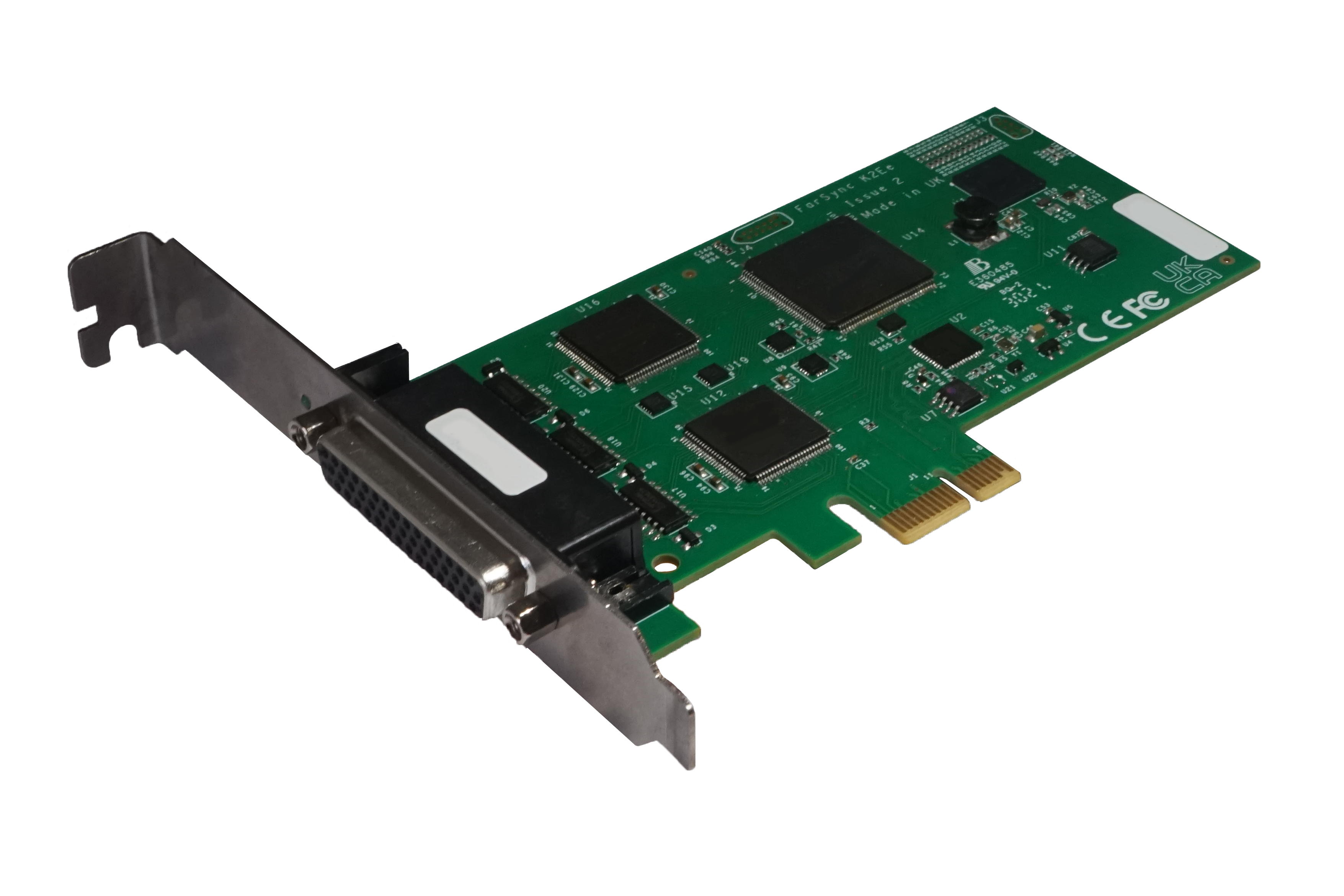
FarSite has seen a very positive reception to the first FarSync K series card
The K Series, which follows on from the long-running T Series, has gained particular traction for its reliability in both Synchronous and X.25 environments as organisations modernise their communications infrastructure. Popular legacy cards such as the FarSync T2Ue & T2Ee have widely been updated to the FarSync K2Ee across many sectors.
A Focus on Seamless Integration
We have prioritised a straightforward transition for our existing client base. By ensuring that the K Series hardware is functionally compatible with previous generations, FarSite has enabled users to perform upgrades without the need for extensive software re-engineering. This “plug-and-play” approach, supported by a unified FarSync API, allows legacy applications to remain stable while benefiting from newer, more efficient hardware.
Versatility in Synchronous, X.25 Formats and BERT
The K Series has been well-received across a variety of specialised sectors, including telecommunications, air traffic control and defence. This is thanks to FarSite’s excellent attention to detail during the k series development.
- Synchronous Support: The FarSync K2Ee provides stable synchronous communications in a low profile PCIe format and is frequently utilised in industries requiring the highest level of reliability.
- X.25 Connectivity: For industries relying on X.25 protocols, the K Series offers dependable integration with modern operating systems, including Windows 11 and the latest Windows Server versions, as well as various Linux distributions.
- Bit Error Rate Testing: The K2Ee is also the foundation for the company’s latest high-speed BERT (Bit Error Rate Test) tester, which now support speeds up to 20 Mbits/s.
Long-Term Reliability
Rather than requiring a complete overhaul of existing systems, the K Series is designed to slot into current workflows with minimal disruption. This emphasis on compatibility and ease of installation has helped us maintain our position as a trusted provider for critical infrastructure.
With a presence in over 110 countries, our latest hardware cycle suggests a continued demand for robust, specialised WAN adapters that can bridge the gap between established communication standards and modern computing environments.